"When dawn spreads its paintbrush on the plain, spilling purple... ," Sons of the Pioneers theme for TV show "Wagon Train." Dawn on the mythic Santa Fe Trail, New Mexico, looking toward Raton from Cimarron. -- Clarkphoto. A curmudgeon artist's musings melding metaphors and journalism, for readers in more than 150 countries.
Showing posts with label WWI. Show all posts

Sunday, January 5, 2020

Toasting the passage of time past

Reunion Cemetery, Oklahoma County


The relic speaks  through the centuries
Take a birthday drive on the back roads, and you can travel into the past.
I am drawn to old cemeteries and love to walk through them, thinking of the stories, marveling at the names, humbled by the creativity.
Such were the discoveries today at the territorial Reunion Cemetery I found north and east of Edmond. It haunts of  tragedies and loves, of lives long and lives shortened.
"Mother," 1840-1905, 


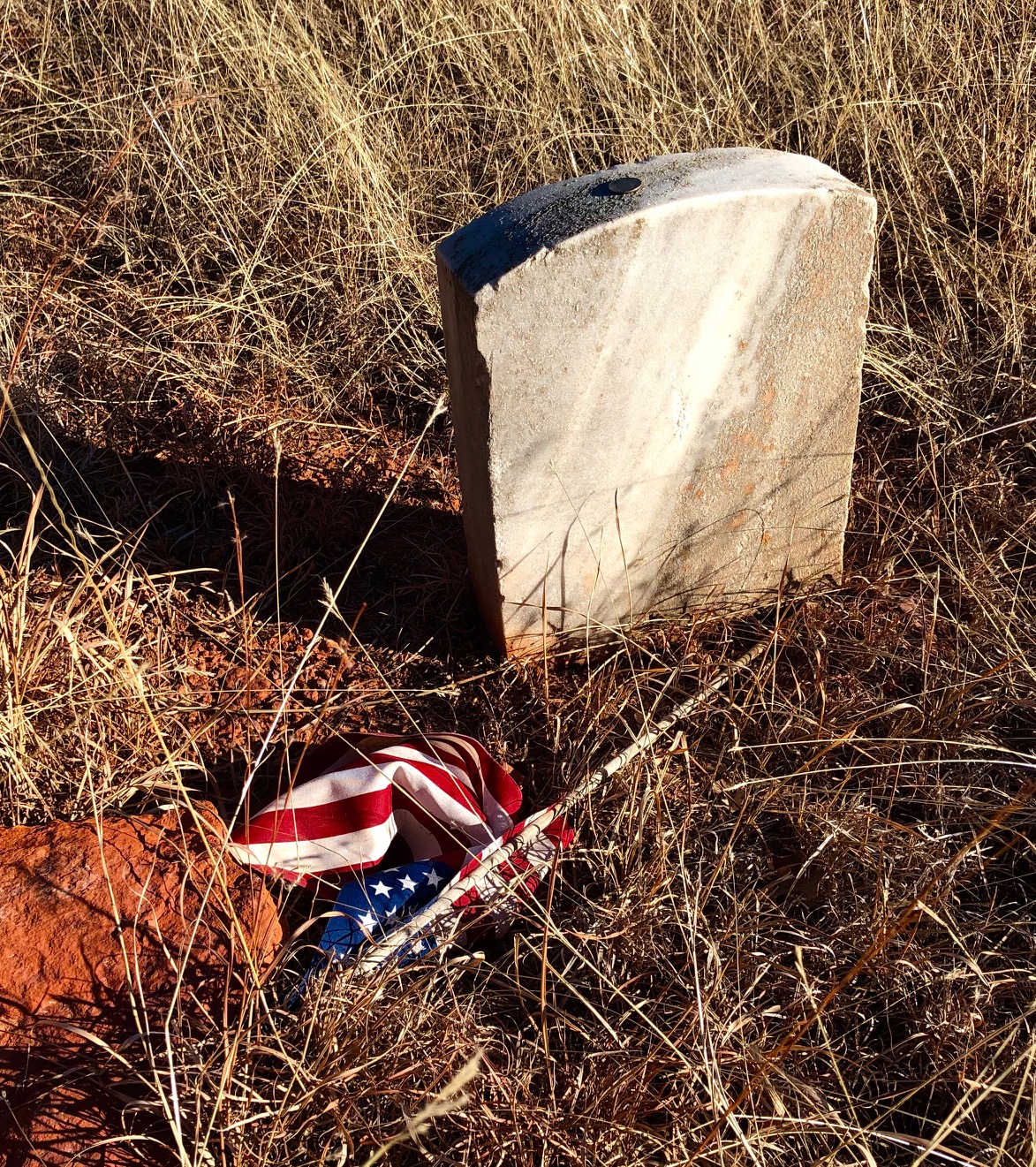
No name, but a flag for a vet
Gone and forgotten. Gone and remembered. When names and tombstones spoke of simpler times, of tougher times, more individualistic times, even though there are newer graves here too.


Forgotten

The Bridges, Adeline, 39 in 1907, Napoleon, 53 in 1912

WWI brother veterans

Another WWI vet

He died in combat in WWI

Bundora Wallace, 30, died in 1893

Mother

Another one forgotten in a lonely place


Tuesday, November 11, 2014

'Thank you for your service,' Veterans!

The Thunderbird atop the monument outside the 4th Division Museum
"Thank you for your service, sir," said my veteran, M/Sgt Vance Clark, USAF, last week as we toured the 45th Infantry Thunderbird Division museum in Oklahoma City.
At the base is the roll of combat
He'd been talking to a Korean War vet who was one of the staff.
That veteran replied to him the same way, "Thank you for your service."
They are a unique band of brothers, especially those who have been in combat.
If you haven't been to the museum on NE 36th street, don't be fooled by all the military vehicles outside. That's impressive, along with the monuments  and comments.
Inside is an amazing museum of more than just a division that fought and died in WWII and Korea. There are Bill Mauldin originals, a history of military firearms throughout American history, a room dedicated to WWI, relics from the divisions  WWII battles across Nazi Europe, including Nazi flags and gear, relics that belonged to Hitler. Most moving to me is the room commemorating the concentration camp at Dachau, which the division liberated.
On this Veterans' Day, or on any other, you come out of there, and you know the value of the words,
"Thank you for your service."
Snap a salute, and be thankful.

Monday, January 27, 2014

Janus--Record month "blogstone"

Screen shot of stats at 2:36 p.m. today
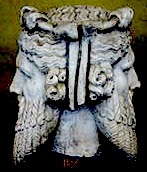
January, month of Janus, the Roman god of two faces, looking back and forward, set two  records, reaching a 'bloodstone" for Coffee with Clark. 
Roman god Janus
The blog surpassed 6,000 page views this month between 2 and 2:30 pm CST today, about 500 more than last month, and more than 6700 page views in the last 30 days. 
Boosting the traffic this past month have been the numerous articles about my twitter for journalists class at UCO, #clarkclass, which generated a lot of interest. As with the new year, I don't know where this is going, but Coffee with Clark will continue to change and grow as it approaches its sixth birthday.
And during the month, a reader from Cameroon in Africa notched the 131st country to have readers of the blog, and 19th in Africa.
Cameroon
Cameroon, located just north of the equator, was colonized by Germany in the 1880s, but divided by Britain and France after WWI. After about 10 years of fighting against those colonial powers, the country gained independence in 1960-61. 
With more than 20 million people, Cameroon is slightly larger than California. While it is relatively stable and economically strong compared to its neighboring countries, there is a lot of poverty. In the early 2000s, unemployment was about 30 percent. French and English are official languages.
It has the same authoritarian president since 1984, and corruption is rampant, ranking it 144 out of 179 countries, according to one report. Still, it is a haven for many refugees from neighboring countries. Its flag was adopted in 1975. 
With more than 200 linguistic groups among the population, and a widely varied geography, Cameroon is often referred to as "Africa in miniature."I have no idea who the reader from Cameroon was this month, but these visitors help me travel the world in my imagination.

Sunday, September 15, 2013

New Reader, 121 on the nation list

The High Tatra Mountains, northern Slovakia
I want to go there. So I thought when a reader from the 121st country to click on the blog arrived...Slovakia. Of course, when I grew up it was part of Czechoslovakia, carrying a long history of invasion and turmoil in central Europe. But not now.
Map from the CIA
After a "Velvet Divorce" as part of the "Velvet Revolution" in 1992, the former country became two. It had the highest economic growth rate for three years  in the late 2000s, before voting against the Greece bailout by the EU. But it is still flourishing, and made recent news for women business people emulating Steve Jobs. See the New York Times article.
Ancient castle overlooking Danube, in capital of Bratislava
originally build including stones from Roman ruins.
It's taken a long time to get there, since the Slavs began arriving in the area in the fifth and sixth centuries. It's been part of various empires and invasions, including the Moravian Empire, testified to by castles on many hills. any castles. Longest was the Kingdom of Hungary from 1,000 to 1919. Relatively peaceful after WWI when it became Czechoslovakia, the country was sold down the river by Britain in 1938 when Chamberlain gave in to Hitler at Munich. Slovakia caved to Hitler during WWII.
A communist coup in 1938 put the country under the control of the USSR until 1989-90 with the fall of the Berlin Wall, and the dissolution of the USSR.
Now the country has about 5.4 million people and is somewhere between the size of South Carolina and Mississippi. Slovakia has its own website or if you spell it in Slovak, Slovensko .  More about the country can be found on the European website.
There is one famous Slovakian you've heard of--Andy Warhol, whose parents were Slovakians. Another Slovak of note, to whom many aviators owe their lives, was  Štefan Banič--who invented the parachute in 1913.
The country's flag colors echo several Slavic countries, with white, blue and red. Except for the Slovak coat of arms, it would be identical to Russia. It's also very similar to Slovenia's flag, a country it is often confused with, even by world leaders. 
The Slovak name for the country, Slovensko, is identical to Slovenian word for the Slovenian language,That’s just one of the near-similarities between Slovenia and Slovakia that cause confusion for outsiders.  And the fact that they’re both in the EU, both in NATO, both formerly part of Austria-Hungary, and both border Austria.


Thursday, July 4, 2013

The blog at 109... Africa again

There was a new reader of the blog today, and that person lives in Togo, marking the 109th country in the world to have clicked on this site. Whoever it is, I'd like to think they checked here because of America's Independence. Togo has a history of promised democracy overruled by the military and unrest. At any rate, it becomes the 16th African country to have readers of this blog.
It's a small country, 317 miles long and only 87 wide at the most, about the size of West Virginia. Largely tribal, it became part of the "Slave Coast" from the 1500s to the 1700s as Europeans raped the country. Germany claimed it as a protectorate in the late 1800s, and after WWI, France took over. It gained independence in 1960. The country has about 6.9 million people, and the official language is French, but many tribal languages are spoken as well, with about 40 ethnic groups. Indigenous beliefs are the main religions, with both Christian and Muslim minorities.
The flag was designed in 1960 by renowned artist Paul Ahyi, and uses the popular pan-African colors of Ethiopia, but with the star on red, resembles the flag of Liberia which echoes the flag of the U.S.A.
I don't know who this reader is, but wish I knew. There are so many stories. And I thought you'd like to see a map of how Africa was "colonized" by the Europeans befoe most gained Independence in the 1960s.

Friday, May 17, 2013

The blog at 103 countries--Africa again

About the time I think this blog has reached its limit geographically, readers from a different countries hit on it, and that happened twice this week, both from Africa. Earlier this week, someone from Ethiopia did so, and then yesterday, someone in Ethiopia's southern neighbor, Tanzania, scanned these posts, marking the 14th African nation to be counted.
Considering that there are about 196 "countries" in the world, with 192 as members of the UN, I'm fascinated. There's another blog post coming on the world's countries.
When I was growing up, the main part  of Tanzania was called Tanganyika, and an  island off the coast carried the exotic name of Zanzibar. With the gradual elimination of colonization in the 1960s, the two countries emerged from British control to become Tanzania in 1964, combining their names. Its flag is a combination of the two flags.
As with most African countries, the area lost independence to European countries. Imperial Germany conquered it to make it German East Africa along with Rwanda and Burundi, but after WWI, it became a British mandate from the League of Nations. British rule ended in 1961. Before the Europeans, under a sultan's control, it was the center for the Arab slave trade, with more than half the population sold into slavery in the 1800s. 
But Tanzania is better known for two facts. It is the home of Africa's highest mountain, the volcanic Kilimanjaro, at  19,341 feet--which makes it the highest freestanding mountain in the world.
It is quite possibly the birthplace of mankind, according to fossil discoveries in Olduvai Gorge, where pre-human ancestors lived about 2 million years ago, and homo sapiens has been dated there to 17,000 years ago. The people are not primitive--about 2,000 years ago, they invented a type of steel from a blast furnace
Today the country has a population of more than 43 million, with 80 percent rural, and more than half under 15 years of age. It, like Nebraska, has a unicameral legislature,  with 343 members. Interesting to me is that it has a five-level judiciary combining tribal, Islamic and English common law...proving they can work together, in spite of Americans', and some Oklahoma legislators', fears of Sharia law.
The flag--green for natural vegetation, yellow for rich minerals, black, the skin col, and blue the lakes, rivers and Indian Ocean.
As with all of these visitors from far away, I'd sure like to know more...so many stories. So much imagination. I so wish I could see Kilimanjaro, and Olduvai, and say I'd been to Zanzibar. Wouldn't you? Thanks reader.

Monday, April 8, 2013

New readers, closing on 100 countries

In the past week, the blog has attracted readers from two more countries, bringing the total to 98, not counting the USA. These come from countries with long histories that have been occupied, and their borders changed during history, before finally becoming independent. We in America with a short history, forget how much geography and political rule have changed around the world as various strong powers have exerted their rule.
These newcomers are from Lithuania and Uganda. That means the blog has readers from all the Baltic states, including Latvia and  Estonia. Uganda becomes the eleventh African country on the roll.
Lithuania formed a commonwealth with Poland to the south for about 200 years, but fell to Russia and others in the 1700s. It declared independence after WWI, but was occupied by the Soviet Union, and then  and Germany throughout WWII, when USSR took over. But before the breakup of the USSR, it was the first Socialist Republic to declare independence. A salute!
The flag was used between the wars, and then adopted in 1989, two years before the USSR fell. The history of the colors vary, but are prevalent in folk art.
Uganda's flag dates from 1962, the year it gained independences from the UK. The colors represent the African people, the son, and the blood of African brotherhood. The gray crowned crane, a national symbol, and the military badge of Ugandan soldiers during British rule.
The area was invaded by missionaries in the late 1800s, followed by the British which ruled under the East Africa Company. It imported 30,000+ workers to build the Uganda railroad, but many Indians stayed after completion. The final area took shape in 1914.
It's a troubled land. In the early 1900s, sleeping sickness killed more than a quarter-million---two thirds of the population. Since independence, it's had a history of military coups, the worse from Idi Amin in the 1970s, who killed more than 300,000 and drove out the remaining Indians. The current leader has been in power since the 1990s.  But it is a beautiful land, with wonderful people. Salute!


Wednesday, March 13, 2013

Flag of rebellion and a Saint's country

The flag of Ireland over a statue in Dublin--Cathal McNaughton/Reuters
'Tis a small country with along history and huge influence.
As revelers celebrate St. Patrick's Day here and in Ireland and elsewhere this week, this is a salute to that independent, rebellious heritage, and to the residents  of that country who are readers of this blog.
The flag, like many around the world, is a flag of rebellion. Officially adopted as the country's flag in December 1921 when the country gained independence from Britain, it had been around for about 80 years as a symbol of resistance. It was first used in 1848, with the colors switched, in a failed revolution led by Thomas Meagher. Instead of being sentenced to death, the leaders were sentenced to Australia.
Ireland's "Great Hunger" in the late 1840s help spur both the rebellion and waves of immigration to America, binding the countries' common heritage and culture, which continues today.
Meager said the green represented the Catholic majority, the orange the Protestant minority, and the white, a lasting truce between them. The Protestants were settled into Ireland in the 1550s by the British. Independence came with the division of the country, with Northern Ireland staying with the United Kingdom.

"The Arms of Ireland," an earlier flag, a gold harp on a green background was a symbol of nationalism from 1798 to the 20th Century, and is now the flag of one of the country's provinces.
The tricolor is a powerful symbol in America too. Unthinking, and xenophobic Florida officials in Atlantic Beach passed a law earlier this year forbidding the display of any national flag but the American flag. The resulting uproar, after an Irish pub that had long displayed the Irish flag was ticketed and order to remove the flag, forced them to back down this week. Not smart, especially with St. Patrick's Day coming up.

St. Patrick and the Irish attitude

The patron saint of Ireland was first a teenage slave for six years in Ireland before escaping, but after becoming a cleric, he returned to Ireland as an ordained bishop in 432 AD. He served till his death, March 17, 460. Within 200 years he was already revered as a patron saint.
Ireland gets its name from the invading Celtic tribes which arrived about 600 B.C. Calling their new home "Euerilo" from their homeland, it evolved to old Irish "Eriu" to "Erie" in Irish and "Ireland" in English. Their druid religions were overcome through the efforts of St. Patrick and others.
A history of invasion, occupation and rebellion have shaped the Irish attitude and nationalism. After the Normans conquered England, they invaded Ireland in 1169 and the country was ruled as a kingdom by the British crown. In 1603 a victory at Ulster gave Britain complete control, and the following years included land confiscations and importing more Protestant settlers. Rebellions and violence continued until a Home Rule Bill in  1912 provided for solving "the Irish Problem." World War I and politics and more bloodshed  in a war of independence delayed action until the truce and division of 1921 that gave Ireland its independence as the Irish Free State.
"Sláinte!"

Sources: 
www.irish-genealogy-tookkit.com
http://en.wikipedia.org/wiki/Saint_Patrick
http://www.wesleyjohnston.com/users/ireland/past/pre_norman_history/iron_age.html
http://www.great-britain.co.uk/history/ireland.htm
http://usnews.nbcnews.com/_news/2013/03/13/17293622-irish-flag-flies-again-at-pub-after-ban-sparks-outrage

Sunday, March 10, 2013

Singing, and a flag of finally free in the Baltics

One of the readers of today's blog lives in a country whose peoples have been invaded, subjected, abused and massacred for centuries it seems. I have no idea why someone from Latvia clicks on this blog, but I'm glad they do. One of the joys, strengths and plusses of the Internet is that it brings together people who treasure freedom and John Milton's free marketplace of ideas.
One of the hazards of being a people and a country in a strategic location is that other countries don't ask permission and simply overrun you for their advantage.
The flag of this Baltic state goes back to perhaps the 13th century. The red symbolizes the blood of their citizens lost in defending their liberty. One legend is that a leader wounded in battle was wrapped in a white sheet--thus the center white stripe. It's similar to a legend in Austria.
But the Latvians have been subjugated by the many, including the Polish and Swedish, and then the Germans, the Nazis and Soviet Union. More than half their population has been wiped out in various wars.
After the devastating WWI, the Republic of Latvia was founded in 1918 and the flag adopted. It was occupied and annexed by the Soviet Union in 1940, till the Nazis invaded, and after WWII, it was subjugated again by the USSR. During all that time, the flag was banned.
peaceful "Singing Revolution" between 1987 and 1991 led to independence of Latvia, Lithuania and Estonia in 1991. http://en.wikipedia.org/wiki/Singing_Revolutionn
With independence and the fall of the Soviet Union, the flag few again over this country. Complicating the picture is that a large minority of the population are native Russians. Here's a salute to a county and citizens who really value independence.

Tuesday, February 26, 2013

Real "Red" states, rebellion, flags and freedom-1

This is a complicated story of several countries and flags, two of their descendants. and a heritage of war, communism and independence.
Slovenia's flag today
How else could I summarize the countries  and flags of many readers of this blog, Slovenia and Vietnam, both of which have involved American history and affected American politics? In fact, Slovenia ranks tenth in the number of all time readers, and I, who pride myself on geography, had to look it up on the map, even though I knew where Yugoslavia and The Balkans were.
When I grew up in the Cold War, These were "Red" states--Communists. Slovenia was a member of the country Yugoslavia, headed by the dictator Tito who had fought the Nazis in WWII. But when we were all afraid of communism, Tito was as close as we could get to a good Communist because he maintained independence from the USSR. Still though, Yugoslavia's flag carried that dreaded red star we associated with Russia.
Yugoslavian flag, 1945-1991
The area of Yugoslavia, which means "Southern Slavs," has and long and turbulent history, part of the Balkans where World War I was started when Serbs assassinated the Austrian Duke Ferdinand in 1914 in Sarajevo, fighting Austrian dominance. After the war, the country was formed in 1918 as the Kingdom of the Serbs, Croats and Slovenes. It became the Kingdom of Yugoslavia in 1929.
Invaded by the Axis in 1941, the Partisan Resistance Movement, led by Tito, added the red star to the middle of their flags, including Slovenia's. At the end of the war, the national flag of the Socialist Republic of Yugoslavia continued the red star, until the breakup of Yugoslavia in 1991.
That again brought a three-year war to the region and involved American, NATO and Russian forces trying to settle conflicts between the new countries of Bosnia / Herzegovina and Croatia, neighbors to Slovenia and Macedonia--all former parts of Yugoslavia. As a matter of fact,  residents of all those countries have been readers of this blog.
 Today, the national flag, designed in 1991, features three equal horizontal bands of white, blue and red, with the Slovenian coat of arms in the upper hoist side of the flag centred in the white and blue bands. The coat of arms is a shield with the image of Mount Triglav, Slovenia's highest peak, in white against a blue background at the center; beneath it are two wavy blue lines for the Adriatic sea and local rivers, and above it are three six-pointed golden stars arranged in an inverted triangle which are taken from the coat of arms of a great Slovenian dynastic house of the late 14th and early 15th centuries.
The flag's colors come from a medieval coat of arms. The existing tricolor dates from 1894 in the Spring of Nations, designed by a group of students in the capital of Ljubljana.
I told you it was complicated...flags have such interesting stories matching those of their countries.  Next, Vietnam.