"When dawn spreads its paintbrush on the plain, spilling purple... ," Sons of the Pioneers theme for TV show "Wagon Train." Dawn on the mythic Santa Fe Trail, New Mexico, looking toward Raton from Cimarron. -- Clarkphoto. A curmudgeon artist's musings melding metaphors and journalism, for readers in more than 150 countries.
Showing posts with label Taos. Show all posts

Saturday, November 13, 2021

When art makes people happy

"Taos home," 8 x 10 watercolor 300 lb. rough press paper

Art
is therapy in so many ways for an artist, but one of the best is when your work makes other people happy, lifts their spirits.

Such is the case today when my watercolor commission of a home in Taos, by Tracey Zeeck, was presented as an early Christmas present to her sister.

Grateful for the opportunity to give, and to paint adobe and New Mexico skies and light.


Monday, November 2, 2020

Landmark memories

"Landmark memories," 5 x 7 watercolor holiday greeting card

Landmarks,
before GPS and detailed maps, loomed large in travel and history.

To me, and others, they are still important, and when I travel, I look for those as signals of memories and  of the stages of my trips.  Some are relatively small, but significant to me. 

Others capture my imagination, like the historic Taos Pueblo in New Mexico. It's literally a landmark, made of adobe, and the center of a civilization older than the United States, or the first European invaders. Many landmarks accrue a sense of power, of sacredness, of influence.

You and I can't visit there now, as it is closed to the public because of the quarantine. But that makes it even more precious. And like many landmarks around the world, considered as sacred by the inhabitants or others.

Thus today's watercolor...not architecturally accurate, but painted as an icon and lasting symbol of living, of memories, of landmarks of imagination, of travels, of special people. And I do know there is now there now, and on the sacred mountain, another landmark.

Thursday, December 20, 2018

Adobe, Dust into dust - 5 days 'til Christmas

Dust unto dust, #watercolor card
Adobe, an "American" word, coming from the Spanish, which like much else in Spanish, came from the Moors, the Arabic... al-tub, the brick. Dirt and straw mixed with water to form bricks, stacked and harden under the glaring sun in arid areas of the world.
Dust into dust, what a metaphor...thick walls, cool in the summer heat, insulating in winter, bone of our bones. When not maintained, melting back into the earth again as do our physical bodies.
I don't know that Jesus knew adobe, but expect he did, as a carpenter, and you can read where they let someone down through the roof...flat roofs are common in adobe. It's a poor person's building material.
In Mali, I was at home because adobe buildings and stacks of bricks were abundant. In New Mexico, at Taos, I've seen Pueblo residents shaping and maintaining their 1,000+ year old walls, every year.
I've sat inside adobes, had beans and tortillas long ago, and posole in a Santo Domingo Pueblo home on a feast day more recently. Quiet. Solid. "Homey." I've seen ruins of others melting back to where they came from.
Earth. Home, Flesh of my flesh. Until you look up at the stars.


Friday, November 30, 2018

Memories, of art and seasons

"Memories," today's 5 x 7 #watercolor card
Coast down the "hill" on the High Road to Taos in New Mexico and you enter Ranchos de Taos. Turn north to the iconic architecture of sacred Native American Taos Pueblo.
Turn south and you come to another icon of sacred architecture at the Spanish mission of San Francisco de Asis, centered in what was the town's plaza.
Built between 1772 and 1816, about 120 feet long, its picturesque adobe buttresses at the rear include the distinctive beehive shapes. 
The church has captured artists' and photographers' attention for years, perhaps most famously, Georgia O'Keefe, but also mine, and my father's, almost 80 years ago.
Memory goes deep inside in such a place, and the church draws you there, as a pilgrimage almost, even if you are not a Catholic.
Memory so deep, so tactile from many drawings and paintings,  that this watercolor comes quickly, without even looking at a photo or other work.
And below, are two of Terrence Miller Clark's (Dad's) 12 x 18 plus frames drawings from 1940. And my most recent photo, in September. 
All art comes from memories, just as this season does.
Memories.


Saturday, August 19, 2017

Risking myself, Watercolor

Risking morning in Taos, 5 by 7 watercolor, 140 lb. d'Arches

"Being myself includes taking risks with myself, taking risks on new behavior--trying new ways of 'being myself,' so that I can see how it is I want to be." --Hugh Prather, Notes to Myself

We live in a world that discourages risk, that wants everything to be safe and secure and successful.
But there is no success if there is no failure, and no failure if you don't take risks. And no excitement in living in a rut of routine and repetition.
I've just read Hugh Prather's Notes to Myself, from 1970, and his aphorisms and insights were just what I needed ...thoughts on living now, being authentic, on being yourself, on pleasing people, on humanity and more.
Out of that book came this painting,  taking risks every step we take, every day. My risks include standing up to paint when the spirit is dry, in attempting things I'm afraid of, in trying new things--all part of living changes and "retirement."
A  few other snippets from his book that spoke to me:
  • "Perfectionism is a slow death."
  • "Why do I judge my day by how much I have accomplished?"
  • "Dishonest people believe in words rather than reality."
  • "There are no absolutes for something so relative as human life."
  • "I like a man with faults. To err is human--I;m uncomfortable around gods."
  • "If the desire to write is not accompanied by actual wrting, then the desire is not to write."

Sunday, March 29, 2015

Compost and small frames.--II

Rain on the Sangre de Cristos--I painted this on the port of my late uncle's porch in Santae Fe, a few years ago
Pueblo Universe, 4" by 10"
Much of my compost pile of unframed work involves New Mexico obviously. These are also smaller, freer, more impressionistic. The largest is 7" by 10"  but all are non-standard sizes. I still need to have these framed.
The one at top I painted from my uncle Mike's front porch in Santa Fe five years ago, watching rain obscure the mountains. "Pueblo Universe" is a favorite and I have no idea how I did that, and "Taos Spirits" is another favorite impressionist, a small one of a large version I sold a few years ago at Paseo in Oklahoma City. At the bottom and a traditional landscape, "Cabezon" is a volcanic neck in northwest New Mexico, and this is the view I saw heading home from camping at Chaco Canyon. All of thee are personal.
Taos spirits--6" by 9"


Going to church--5" by 5"

Cabezon--on the road back from Chaco Canyon--7" by 10"

Saturday, February 28, 2015

The pages of February

Watching gentle, large flake snowfall out my window this morning, sipping coffee, thinking of travels past and future, I journeyed in other worlds this month, in the pages of eight books, five of them completed, one sampled, one mostly read, and one underway.

Five of the books came from friend Jeanetta Calhoun Mish's Mongrel Empire Press in Norman, poems, short stories and a fictional novel, all with strong Oklahoma roots and subjects. 
The other included Longmire creator Craig Johnson's "Wait for Signs," a collection of short stories, purchased from friend Joe Hight's Best of Books in Edmond.
The books of poetry were "The Walmart Republic," J.L. Jacobs' Streets as Elsewhere," and Carter Revard's, "From the Extinct Volcano-A Bird of Paradise."
"The Long Rifle Season" by James Murray is a bunch of short stories, appropriately titled "Tales," most of them set in southeast Oklahoma, and including a fictional view inside Timothy McVeigh's mind. The fictionalized novel by William Cunningham is "Pretty Boy Floyd."
The seventh book is Natalie Goldberg's "Loving Color--Painting, Writing and the Bones of Seeing." Writer-teacher Goldberg lives in Taos, doing what I dream about, and I bought the book thinking it would be about writing. Instead, it is a book about a writer taking up painting, filled with her art and prompting. I found it has a chapter on Cezanne, my favorite artist, which means it's a must read to complete.
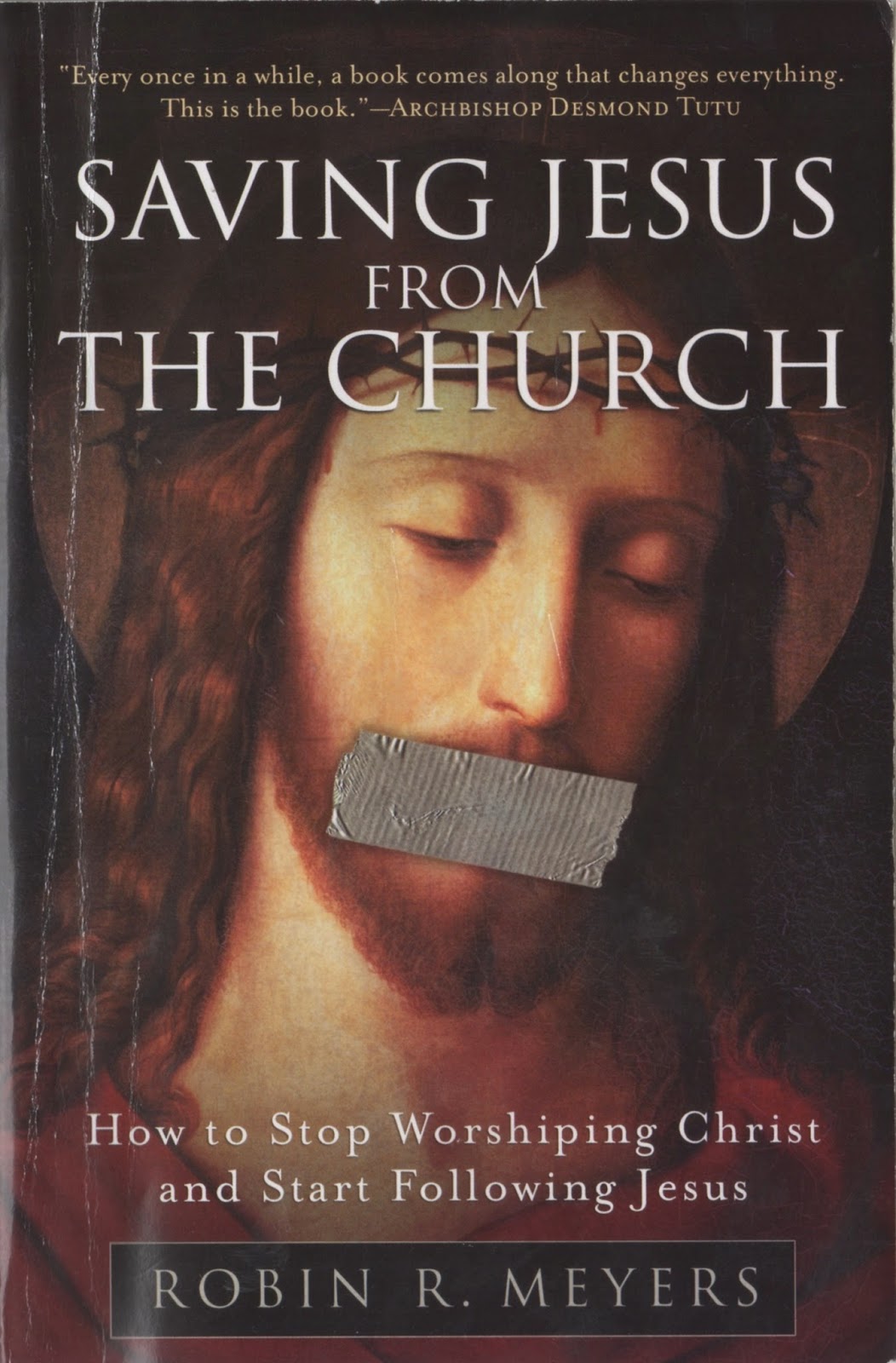
The eighth book was OKC Mayflower UCC church pastor Robin Meyer's book, "Saving Jesus from the Church," a discussion prompt in our Sunday night "Soul Detox" group. He has lots to say about the difference in institutionalized Christianity and what Jesus taught.
Reviews and comments on most of these are coming. The poetry books are the most difficult, as you can see from my previous review of "The Walmart Republic."


Friday, December 19, 2014

Six days to Christmas, from the sacred earth

Where earth is always sacred, watercolor card
Adobe...the earth, the ground on which you walk. In the Southwest, it's also the ground in which you live. There is no more iconic testament to that than Taos Pueblo, in New Mexico, where real Americans have been living longer there is history.
Yes, they have adopted Christianity, as have many peoples, and adapted it to their culture and even older beliefs and religion, as all people have in one way or another. But underneath is this reverence for the land, the unity of all creation, sitting at the base of a sacred mountain where eternal gods dwell.
When you walk here, you gather a deep sense of time, of community, and of the truely sacred.

Thursday, July 10, 2014

Adobe and turquoise--therapy two

Adobe and turquoise, Taos, 5 by 7 watercolor, 140# d'Arches
Painting is foremost an exercise in seeing and problem solving. Inspiration, craft, talent, sure. But after the previous post on adobe therapy, the more I looked at the painting, the more I knew it needed.
So here is the second version, with blue sky adding the necessary contrast. I like it so much I bought a mat for it today.
Santuario--4.5 by 9
And in the meantime, I found the little watercolor sketch I mentioned two days ago that I did at Chimayo' 10 years ago when leading a student trip to New Mexico. This was done en plein wire, while my students wrote and photographed around me. Great memories.
Adobe and turquoise are sacred--no wonder there is therapy there.

Tuesday, July 8, 2014

Healing earth--Adobe therapy

Adobe therapy--from a Susan Clark photo, 5  by 7 watercolor, 140# d'Arches
Have you been to El Santuario de Chimayo' and scooped up some of the miraculous healing dirt?
Evidence of healing faith and dirt--Chimayo'
If you have not, you probably don't believe. But walk through that adobe church and the room where the crutches and other offerings hang of those who been healed, and you might feel differently. The Santuario attracts more than tourists, as thousands of make pilgrimages to it during Holy Week.
The Santuario draws faithful pilgrims
You're entering Northern New Mexico and one of the last bastions of medieval faith. You may not have the penetents' faith, but you have to put your scientific mind on hold. You encounter a different world.
There is something about adobe, earthen vessels, dirt that is healing. Even those of us gringos touch on it when we talk about the therapy of gardening, getting our hands in the earth.
These were thoughts today when I sought something to paint, something to help healing, and chose a scene from one of Susan's photos of Taos Pueblo. That ancient civilization also knows the power of the earth. Attend Native dances and see it reaffirmed--for all their rhythm and traditions, one stands out...one foot of each dancer is always in contact with Earth Mother.
Small previous watercolor of Taos
So I started painting adobe again today. Yes, I can go get my small bottle with some of the holy dirt of Chimayo' in it. I have not painted the church other than a quick sketch, but my Dad did. But I love painting watercolors of adobe.  And with these thoughts today, I now know another reason I'm drawn to painting adobe. It's therapy in more ways than I know.


Sunday, April 20, 2014

Shadows of the crosses--III

Campo Santo at old San Geronimo church at Taos, which was destroyed in the 1680 Pueblo Revolt.
Crosses of every shape and form dominate the ruined San Geronimo church at Taos Pueblo. The cemetery is holy ground, where hundreds of years of believers lie. Only Taos Indians may enter this area, while others may take photos from outside the adobe walls.
If you get on the backroads of the state, you find more little churches and capos santos and crosses everywhere, all decorated and remembered by the faithful, but especially during Holy Week in New Mexico. And the gravestones only multiply in size and variety of portraying the cross.
Church at Canoncito, near Santa Fe
Gravestone at Canoncito

Crosses at Canoncito

At Canoncito

Gravestone at Truchas, Penitente Morada in background

Cemetery near Penasco on High Road to Taos

Wednesday, March 12, 2014

Pueblo pondering

Taos two...8 x 8 1/2 watercolor, handmade paper from  India
Taos Pueblo in New Mexico is closed to the public this month, and that is good, though we Caucasians can wonder why, and even if we were told, we would not understand.
When you know you come from the earth, and that all things and beings are related, part of a larger whole, spirituality is inseparable from daily life.
We could learn much here, we'd be richer ourselves, if we'd shut down our national parks and public areas for a year at a time, banning traffic and people, to let the earth and our fellow creatures rejuvenate.
But we are too money and time obsessed, too divorced from the wonder of all things to just stop, and let the earth breathe without us. We think we're civilized, but this town and people were here before we were...and they'll be here after we are gone.
Thus today's painting...Taos Two.

Monday, March 10, 2014

Taos...from the earth, sky and water


Taos Pueblo--earth, sky and water flowing together, 8 by 9 watercolor
Taos Pueblo...rising from mother earth into the sun bright sky, soaring  with the sacred mountain, and  with life water at its feet.
Writing beside the Taos river
I like to come when the tourists aren't there, though I am one. You can sense the oneness of creation, of mankind's small niche in the total, of a civilization not subject to the tyranny and superficiality of the white man's clock. 
The spirit of the place and people draws us less fortunates in wonder and awe, awakening something deeper inside.
The photo at right is from my last student trip 10 years ago, gathering strength from the earth, sky and water as the Pueblo does spiritually and literally.
And with the New Mexico itch for spring break, today's painting, from memory, of that ancient adobe.

Friday, December 20, 2013

Four days 'till Christmas

Cold night at Taos---4 by 6 watercolor

Saturday, March 6, 2010

Dawn at Taos

Watercolor, 8 x 11
Fabriano Artistico 300# paper

From John Nichols' The Sky's the Limit

Every morning for thousands and millions of years, the  sun "comes up," over the holy mountain of the Taos Pueblo, inhabited by Americans for hundreds, perhaps thousands of years.

On the Mesa west of town, the sky gradually lightens, silhouetting the Sangre de Cristo Mountains. In between is the Rio Grand gorge, dropping hundreds of feet through lava rock in a rift valley.


The mountain is majestic because it arises so abruptly from the mesa--Spanish for table --land, but it majestic for many other reasons. It is off limits to all but the prehistoric Taos Indians who live in their pueblo and the iconic multi-storied adobe great house that was typical of many pueblos before the Spanish intruded 500 years ago, bringing "civilization," Catholicism and disease with them.

But Taos has survived them, and will survive the late-arriving gringos as well. This is a people and land of contrasts and invaders and beauty. The beauty will remain. All others are temporary and short-lived.

Note: the current photo at the top of my blog is one sunset view from that mesa.

When I think of Taos, I think of my 18-year-old Dad, who wanted to join the art colony here in the 1930s, after he'd lost his leg trying to jump a freight in Tucumcari inthe Depression. I think of the cold, clear northern New Mexico air, the smell of pinon smoke, the cottonwoods, the artists, the light that draws artists, and the sacred mountain that towers over town and pueblo at dawn, at sunset and in between, season after season.

Tuesday, January 5, 2010

In a Taos mood


Eight years ago, at the pueblo, UCO writers and photographers and fellow travelers posed in front of  the centuries old landmark. One of the last study tours I took on fall break. I told the students you travel 500 miles and more than 500 years back in time, and they found out I was right.

Today snow blankets the pueblo and the sacred mountain behind it, but life goes on. These students and travelers are now miles more down the roads of life, some married, some with children, others far away, and others in new adventures.

Do you know who they are?

I can pick out Fawn Porter, Kristen Armstrong, Irish Mock, Tom Isbill,  Cody Vignal, Lieth Laws, Susan Reger, Pam Washington and husband Mike, Mike Sokof, Mark Zimmerman, some whose last names are blurred, like Ryan, Eva, and others whose faces say "I know you."  Help.

That's me and one of the Taos dogs on the end. I'm the one with the frown.