"When dawn spreads its paintbrush on the plain, spilling purple... ," Sons of the Pioneers theme for TV show "Wagon Train." Dawn on the mythic Santa Fe Trail, New Mexico, looking toward Raton from Cimarron. -- Clarkphoto. A curmudgeon artist's musings melding metaphors and journalism, for readers in more than 150 countries.
Showing posts with label Africa. Show all posts

Thursday, February 25, 2016

An AK-47 on the flag, another blog country--Hey USA?

A visitor from a country with an AK-47 and bayonet on its flag clicked on this blog today, making it the 142nd on my list of countries  with readers.
Looking up the facts I saw the flag and read about it, immediately thinking  the USA should follow suit, with the complete lack of gun control in this country and constant, read constant, mass shootings (one today in Kansas).
Let's take a hint from our friends in Mozambique and replace all our stars with assault weapons. It's be more appropriate.
But I'm not making fun of these people in southeast Africa, who put the weapon on  their flag as a sign of their struggle for independence from the Portuguese in 1975. It's the only U.N country  with a weapon on the flag. More on that later.
The country, named after an early Arab trader, now has 24 million people and is one of the poorest in Africa, thanks to being exploited by Portugal for centuries for its minerals, spices and slaves. Vasco de Gama visited it in 1498 and it was colonized in 1505 as Portuguese East Africa, an important trading island, port and country that declined after the Suez Canal opened in 1869.
After gaining independence for about two years, it descended into civil war until 1992, has had multiple party elections and is a relatively stable republic. Official language, spoken by about 50 percent, is Portuguese, with others speaking tribal languages of the Bantu people. Main religion is Christianity, plus large Muslim and tribal religion minorities.
Ah, the flag, adopted in 1983: Green for the riches of the land, black  the African continent, yellow  the country's minerals, and red  the struggle for independence. The rifle stands for defense and vigilance, the open book the importance of education, the hoe  the country's agriculture, and the star Marxism and internationalism.
This reader and country make it the 25th on the continent who have followed this blog. 
Africa is huge. Look at the map below. And, to my new reader, welcome and thanks.

Saturday, January 30, 2016

The blog at 140 countries and landlocked!

A reader in the African nation of Zambia clicked on this blog this month, marking the 140th country and territory to have read Coffee with Clark.
That followed two readers in two other first time countries in December--Kyrgyzstan and Botswana. That means there have been readers in 22 African Countries and 24 Asian counties.  All three of these are land-locked.

Why and how, I don't know. I've added a translation button to the blog so visitors can read it in their own languages, but the story behind those readers remains a tantalizing mystery to me. 
The flag counter on this page is also not quite accurate--having been added this last year, and sometimes it's slow to update.  But as the blog reaches its seventh birthday May 3, it's come a long way, and reached people and done things I never dreamed back them.
Now, for the record, he's a little about each of those "newcomers" which makes them even more interesting. I'm thankful for my readers--you help keep me going.

Zambia--Formerly British Northern Rhodesia, it gained independence in 1964. It holds regular elections and has a population of 14.5 million, and is the location of the spectacular 354 foot Zambezi falls in the  Victoria falls, the world's largest.
In 2010 the World Bank named the country one of the fastest economically  reformed countries.  

The flag is notable in that its design is not focused on the middle: colors represent green for the flora, red for the struggle for freedom, black for the people and orange for the natural resources. That's a Zambia fish eagle.
Botswana--Formerly the British protectorate  Bechuanaland, Botswana adopted its new name after becoming independent  in 1966. Since then, it has maintained a stable representative democracy, with a consistent record of uninterrupted democratic elections.
Botswana is  flat, with up to 70 percent  being the Kalahari Desert.  Its border with Zambia to the north is poorly defined but at most is a few hundred yards,
With just over 2 million people, Botswana is one of the most sparsely populated nations in the world. Formerly one of the poorest countries, it is now one of the fastest-growing economies in the world.

The flag was designed to contrast with the flag of South Africa, since the latter country was ruled under an apartheid regime. The black stripe with the white frame symbolized the peace and harmony between the people of African and European descent. 
Kyrgyzstan is farther from the sea than any other individual country, and all its rivers flow into closed drainage systems which do not reach the sea. The mountainous region covers over 80 percent  of the country (Kyrgyzstan is occasionally referred to as "the Switzerland of Central Asia.")
It gained independence from the USSR in 1991. Most of the 5.7 million residents are Turkic, non-denominational Muslims. Thirty four percent are under age 16. It is a parliamentary republic but with lots of political and economic instability.
The 40-rayed yellow sun in the center of the flag represent the 40 tribes that once made up the entirety of Kyrgyz culture before the intervention of Russia. The lines inside the sun represent the crown or tündük of a yurt. The red portion of the flag represents peace and openness of Kyrgyzstan. National sports reflect the ancient culture of horse riding.

Tuesday, September 29, 2015

Teaching geography, and Africa

Did you ever have to take blank map quizzes when in school? I did, including filling in countries and capitals, and states and capitals--in junior high.
That gave me a sense of where I was in the world, and also probably spurred my wanderlust. That, along with the fact that Dad always had maps pinned to the walls and we subscribed to the National Geographic.
When I started teaching International Media a few years ago, I was astounded at the lack world knowledge of my upper level college students. Especially after one student identified England as Germany. So I instituted blank map quizzes--continent by continent and regions. No, they don't have to know all of the countries, but we discuss those that they should know, based on current events, news, and media significance. 
I know, I know, that is old-fashioned rote memory. There is still room for it in "modern" politically correct, buzz-word, acronym dominated trendy education. I'm a geezer who tries to stay current with technology and trends, and pretty much a non-traditional teacher. But there still needs to be some basic memorized stuff.
So far, they've done well this semester, and we've covered the Mideast,  South America, SE Asia, Asia and Europe. Coming up is Africa, and I'm trying to instill in them the size of Africa as well. You can follow all of this on the class blog, Clarkinternational.
And here's the study guide on the blog today. Did you realize the Sahara is bigger than the U.S?


Africa is really, really big
The Sahara is bigger than the U.S.

Saturday, March 1, 2014

Memories of an African trip

In Mali, playing with happy kids, seven years ago
Yellow fever shots. Malaria pills.
Africa.
How can you not love kids
Seven years ago this month, I was preparing for a trip of a lifetime.
Thanks to a former student at OSU, now Dr. Shelly Pepper Sitton of the OSU Ag Com Department, I joined a group of journalists on a week-long trip to Mali. It was a State Department-funded trip to help bolster the media in that poor, West African country, a rare democracy and friend of America in the Muslim world. I went along as the newspaper journalist.
Perhaps it didn't work, because since then there has been a military coup, and an uprising in the Saharan north that split the country. If the French hadn't intervened, Al-Qaeda might have the entire country now. Of course, what prompted much of the turmoil was the overthrow of Libya's Gaddafi to the north, destabilizing the entire region. But we were not concerned with politics when there, and welcomed by people where ever we went.
Poor but proud
Lots of miles and wrinkles since then, I still am thankful for what I experienced and learned. I would go back, if I could, so powerful was the trip.
I wrote  and photographed  extensively about it, if you want to see more photos.

Monday, January 27, 2014

Janus--Record month "blogstone"

Screen shot of stats at 2:36 p.m. today
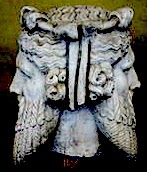
January, month of Janus, the Roman god of two faces, looking back and forward, set two  records, reaching a 'bloodstone" for Coffee with Clark. 
Roman god Janus
The blog surpassed 6,000 page views this month between 2 and 2:30 pm CST today, about 500 more than last month, and more than 6700 page views in the last 30 days. 
Boosting the traffic this past month have been the numerous articles about my twitter for journalists class at UCO, #clarkclass, which generated a lot of interest. As with the new year, I don't know where this is going, but Coffee with Clark will continue to change and grow as it approaches its sixth birthday.
And during the month, a reader from Cameroon in Africa notched the 131st country to have readers of the blog, and 19th in Africa.
Cameroon
Cameroon, located just north of the equator, was colonized by Germany in the 1880s, but divided by Britain and France after WWI. After about 10 years of fighting against those colonial powers, the country gained independence in 1960-61. 
With more than 20 million people, Cameroon is slightly larger than California. While it is relatively stable and economically strong compared to its neighboring countries, there is a lot of poverty. In the early 2000s, unemployment was about 30 percent. French and English are official languages.
It has the same authoritarian president since 1984, and corruption is rampant, ranking it 144 out of 179 countries, according to one report. Still, it is a haven for many refugees from neighboring countries. Its flag was adopted in 1975. 
With more than 200 linguistic groups among the population, and a widely varied geography, Cameroon is often referred to as "Africa in miniature."I have no idea who the reader from Cameroon was this month, but these visitors help me travel the world in my imagination.

Friday, September 13, 2013

African outpost of slavery, 120 on the blog

Map from CIA
A new reader clicked on this blog this week, marking the 120th country to have had readers. I'm astounded, especially since the reader is from Mauritania, the 18th African country on my list.
But when I started looking up facts on this country, I found that it is the "last outpost of slavery" in the world, and that as many as 600,000 people (up to 20 percent of the population of 3.2 million) may be slaves.
That is just hard to imagine. Of course the military government, that overthrew the first elected leader in 2008, denies it, but recent articles by CNN, BBC, the US State Department, and others say differently. It is also cited for other human rights violations including child labor and female mutilation.
Nouachott, with the Atlantic in the background
The capital, on the Atlantic coast, is Nouachott, "the city of dunes, or wind," has an estimated population of about a million. Less than one percent of the country's land is arable, and if other African countries' experience is typical, discovery of oil will only help the rich.
It's a poor Sahara land on the northwest coast of Africa, mostly desert, and most of the people living on less than $2 a day. But it is a new oil country and made news this week for agreeing to sell electricity to Senegal.
The country gained independence from France in 1960, (the U.S. was the first to recognize it)and officially abolished slavery in 1981. But it wasn't a crime to own slaves until 2007, and only one slave owner has been fined. The population is about 30 percent Arab-Berber, 30 percent black and the rest mixed. The north is largely Arab and the south black, and ironically in this African country, many of the slaves are black for white masters.
The overriding color of Mauritania is sand, on the earth and in the sky. The country is larger than Texas and New Mexico combined.
The flag of green for Islam and gold for the sand, carries the crescent and star of Islam, which is the religion of almost 100 percent of the population. I can imagine the reader of this blog surviving in a sad, harsh land. I hope you find it interesting. 
My trip to neighboring Mali a few years ago introduced me to the region, but Mali is a democracy. Poor, yes, but the people were hard working and friendly. I am amazed and learned much.

Thursday, July 4, 2013

The blog at 109... Africa again

There was a new reader of the blog today, and that person lives in Togo, marking the 109th country in the world to have clicked on this site. Whoever it is, I'd like to think they checked here because of America's Independence. Togo has a history of promised democracy overruled by the military and unrest. At any rate, it becomes the 16th African country to have readers of this blog.
It's a small country, 317 miles long and only 87 wide at the most, about the size of West Virginia. Largely tribal, it became part of the "Slave Coast" from the 1500s to the 1700s as Europeans raped the country. Germany claimed it as a protectorate in the late 1800s, and after WWI, France took over. It gained independence in 1960. The country has about 6.9 million people, and the official language is French, but many tribal languages are spoken as well, with about 40 ethnic groups. Indigenous beliefs are the main religions, with both Christian and Muslim minorities.
The flag was designed in 1960 by renowned artist Paul Ahyi, and uses the popular pan-African colors of Ethiopia, but with the star on red, resembles the flag of Liberia which echoes the flag of the U.S.A.
I don't know who this reader is, but wish I knew. There are so many stories. And I thought you'd like to see a map of how Africa was "colonized" by the Europeans befoe most gained Independence in the 1960s.

Wednesday, June 26, 2013

June travels to Africa and Wyoming

When you're stalled, you need to travel, and I'm there now, staring at maps, dreaming. My reading, writing and painting have  withered this spring. Usually priding myself on at least a book a month, and averaging more than that, I looked back and realized I hadn't really read anything since February. There were four books read by the end of that short month, and while I'd started a couple, they also lay stalled.
Then Africa and Wyoming came calling with two books read this month.
Early this month I was wandering through a bookstore and found a new book by a favorite
author, Paul Theroux. He's captivated me because he travels, he writes, and he prefers trains, and I've read his books about South American, Asian and African travel that way--The Old Patagonian Express, The Great Railway Bazaar, Dar Star Safari.
No wonder The Last Train to Zona Verde grabbed me, his "ultimate African safari" I finished it recently, and there's a hitch..he usually travels by beat up bus. He's my age, facing my issues of mortality, and traveling alone from South Africa up through sparsely settled Namibia and corrupt bereft Angola, and it's not a pleasant trip. Here's a side of truth and poverty you can't imagine, of rich government officials rolling in oil money while their people starve. 
Theroux is an expert at telling the stories, and showing the lives of common people, not the stories of tourism brochures. A couple of phrases will give you the sense:
In Namibia, --"it seemed like a place fighting for survival"
In Angola, the nightmare of poverty and corruption and suffering from long wars, he notes wildlife is extinct.--"Angola is perhaps a lesson in wasted time."
Still, it was not depressing, but a journey you wanted to survive, with him, and find out how it ended. Here's a link of him discussing the book.  African book


My paperback doesn't have a color cover
But I needed more friendly territory, and I've found it every Sunday night on A&E channel, with the series, Longmire, set in Wyoming, but filmed in my beloved New Mexico, at places I easily identify.
I learned it was based on a series of books, written by Craig Johnson, and ordered the first of the books, The Cold Dish, a week ago. I've finished it, and feel so at home, with an author who knows the contemporary West.
The main character, a rural sheriff, isn't as handsome as the Gunsmoke Matt Dillon look-a-like who stars on TV, but the TV has the mood and action down straight, and the book is real in its portrayal of people, Western humor, cultures, weather and landscape.
Here are the links to the author and the TV show:
Craig Johnson Longmire TV
Interesting fact I learned writing this. The sheriff drinks Rainier beer. Headquarters of Mount Rainier National Park is at the town of Longmire. Ah, an author's mind.
One phrase that shows you the author really knows his subject, about aged pickup trucks parked around the Red Pony bar:
"in Wyoming, even pickup trucks have personal space."


Monday, May 27, 2013

Blog at 105 and 106--flags of Arab Spring

Two new readers' countries showed up today on this blogs' stats, and they follow a trend of African and Mideast-areas. This makes them more intriguing to me, as usual--Tunisia and Bahrain, become the 105th and 106th countries in the world with people who have clicked on this blog. Number 105 was from Tunisia, where the reader is among a population of over 10 million people in the relatively small country, the smallest in .
A fertile 800-mile coastline to the the  north of Sahara has main it a "granary" of Europe for centuries. You know it best for Hannibal of Carthage, the city funded in the Ninth Century BC.  He and others fought several was with ascending Rome, which conquered in in 149 BC. 
In the centuries since, it became a part of the Ottoman Empire, until the French invaded in 1881 and it was settled by thousands of French and Italians. After WWII, where it helped play an important role in the defeat of Rommel,  it gained independence from France in 1956, but the so called elections put in power one of the most repressive regimes.
The "Arab Spring" that rocked the Arab world began here in 2010 when a street vendor set himself on fire to protest confiscation of his wares and government humiliation. The protests continued with a 2011 overthrow of an autocratic president and the first free elections. Its democracy is evolving.
The flag is the red dating from the 1830s kingdom, and the star and crescent recalls the Ottoman empire.
Number 106--Bahrain, a large island in the Persian Gulf with several small ones, was one of the earliest areas to convert to Islam in 628. There is a letter from Muhammad to one of the rulers. It has been occupied by the Portuguese, Persians and British. It declared independence in 1971, and declared a kingdom in 2002. In 2011, there has been a lot of sustained protests and unrest inspired by the "Arab Spring."
Nestled in a bay between Qatar and Saudi Arabia, an actual causeway connects it to the Saudis. Like its neighbors, it is rich in oil.

The flag is the red of the color of the Persian gulf states, The white on the hoist side is a band, with five points, representing the five pillars of Islam--belief, worship, charitable giving, fasting during Ramadan, and at least one trip to Mecca in a lifetime.
Below is a copy of the letter from Muhammad to the ruler of Bahrain, inviting him to Islam. Read the translation...notice the last few lines of tolerance towards others. Wow. 
I'm impressed, and honored to have readers from these countries with long histories.
"In the name of God the Beneficent, the Merciful: From Muhammad the Prophet of God to Munzir bin Sawa, may peace be on you! I praise God, who is one and there none to be worshiped but except him. I bear evidence to the oneness of God and that I am a servant of God and his Prophet. Thereafter I remind you of God. Whoever accepts admonition does it for his own good. Whoever followed my messengers and acted in accordance their guidance; he, in fact, accepted my advice. My messengers have highly praised your behavior. You shall continue in your present office. You should remain faithful to and his Prophet. I accept your recommendation regarding the people of Bahrain. I forgive the offenses of the offenders.
Therefore, you may also forgive them of the people of Bahrain whoever want to continue in their Jewish or Majusi faith, should be made to pay Jizia. Seal: God’s Prophet Muhammad"

Thursday, May 23, 2013

The blog at 104

From out of the blue, literally, came a reader from the 104th country to have hit on this blog.
I'm pretty good at geography, but I had to look this one up to make sure...
Mauritius...in the Indian Ocean, 1,200 miles east of Madagascar. For some reason, someone from that pleasant little island clicked in.
Here's what I found out...
The island was uninhabited when discovered  in 1507 by the Portuguese.It was the only home of the Dodo bird, which went extinct in 80 years. The Dutch settled it in 1598 and abandoned it in 1710. The French took over in 1715, renaming it Isle de France, and imported African slaves to run the sugar plantations. After Napoleon, the British took over, and abolished slavery in 1835, paying landowners two million pounds for the loss of slaves. They then imported a half million indentured workers from India to work ...gotta have slave labor, even if you call it minimum wage.
The country gained independence in 1992, with a parliamentary government, and about 1.29 million people on the main island and a few others, including 49 uninhabited. It ranks high in freedom, economy and tourism. The flag colors are for the blood of slavery, the Ocean, the light of independence and lush vegetation.
Thanks for visiting reader, and introducing me to another place in the world.

Friday, May 17, 2013

The blog at 103 countries--Africa again

About the time I think this blog has reached its limit geographically, readers from a different countries hit on it, and that happened twice this week, both from Africa. Earlier this week, someone from Ethiopia did so, and then yesterday, someone in Ethiopia's southern neighbor, Tanzania, scanned these posts, marking the 14th African nation to be counted.
Considering that there are about 196 "countries" in the world, with 192 as members of the UN, I'm fascinated. There's another blog post coming on the world's countries.
When I was growing up, the main part  of Tanzania was called Tanganyika, and an  island off the coast carried the exotic name of Zanzibar. With the gradual elimination of colonization in the 1960s, the two countries emerged from British control to become Tanzania in 1964, combining their names. Its flag is a combination of the two flags.
As with most African countries, the area lost independence to European countries. Imperial Germany conquered it to make it German East Africa along with Rwanda and Burundi, but after WWI, it became a British mandate from the League of Nations. British rule ended in 1961. Before the Europeans, under a sultan's control, it was the center for the Arab slave trade, with more than half the population sold into slavery in the 1800s. 
But Tanzania is better known for two facts. It is the home of Africa's highest mountain, the volcanic Kilimanjaro, at  19,341 feet--which makes it the highest freestanding mountain in the world.
It is quite possibly the birthplace of mankind, according to fossil discoveries in Olduvai Gorge, where pre-human ancestors lived about 2 million years ago, and homo sapiens has been dated there to 17,000 years ago. The people are not primitive--about 2,000 years ago, they invented a type of steel from a blast furnace
Today the country has a population of more than 43 million, with 80 percent rural, and more than half under 15 years of age. It, like Nebraska, has a unicameral legislature,  with 343 members. Interesting to me is that it has a five-level judiciary combining tribal, Islamic and English common law...proving they can work together, in spite of Americans', and some Oklahoma legislators', fears of Sharia law.
The flag--green for natural vegetation, yellow for rich minerals, black, the skin col, and blue the lakes, rivers and Indian Ocean.
As with all of these visitors from far away, I'd sure like to know more...so many stories. So much imagination. I so wish I could see Kilimanjaro, and Olduvai, and say I'd been to Zanzibar. Wouldn't you? Thanks reader.

Monday, April 8, 2013

New readers, closing on 100 countries

In the past week, the blog has attracted readers from two more countries, bringing the total to 98, not counting the USA. These come from countries with long histories that have been occupied, and their borders changed during history, before finally becoming independent. We in America with a short history, forget how much geography and political rule have changed around the world as various strong powers have exerted their rule.
These newcomers are from Lithuania and Uganda. That means the blog has readers from all the Baltic states, including Latvia and  Estonia. Uganda becomes the eleventh African country on the roll.
Lithuania formed a commonwealth with Poland to the south for about 200 years, but fell to Russia and others in the 1700s. It declared independence after WWI, but was occupied by the Soviet Union, and then  and Germany throughout WWII, when USSR took over. But before the breakup of the USSR, it was the first Socialist Republic to declare independence. A salute!
The flag was used between the wars, and then adopted in 1989, two years before the USSR fell. The history of the colors vary, but are prevalent in folk art.
Uganda's flag dates from 1962, the year it gained independences from the UK. The colors represent the African people, the son, and the blood of African brotherhood. The gray crowned crane, a national symbol, and the military badge of Ugandan soldiers during British rule.
The area was invaded by missionaries in the late 1800s, followed by the British which ruled under the East Africa Company. It imported 30,000+ workers to build the Uganda railroad, but many Indians stayed after completion. The final area took shape in 1914.
It's a troubled land. In the early 1900s, sleeping sickness killed more than a quarter-million---two thirds of the population. Since independence, it's had a history of military coups, the worse from Idi Amin in the 1970s, who killed more than 300,000 and drove out the remaining Indians. The current leader has been in power since the 1990s.  But it is a beautiful land, with wonderful people. Salute!


Wednesday, March 13, 2013

New readers and their flags, the blog at 95

Readers from two countries not previously showing up on my blog stats clicked in today, bringing the number of countries the blog has reached to 95, I'm stunned, and would love to know what postings attracted them, or how they found it, and if they used the translation device in the left sidebar, or read it in English. Ah, so many questions
The first is especially meaningful to me, Greece, the birthplace of western civilization about 3,200 BC. There's too much history to even attempt to summarize here.
But the flag has a rich heritage. The white cross symbolizes Eastern Orthodox Christianity, the religion of Greece and Cyprus...and I have readers there too.he nine stripes have two different possibilities, representing the nine syllables of the Greek words for "Freedom (the blue) or Death (the white)." I'm reminded of New Hampshire's motto: "Live Free or Die." The stripes may also go way back to symbolize the nine muses, the goddess of art and civilization. the flag was official adopted in 1822,
The nine stripes have two different possibilities, representing the nine syllables of the Greek words for "Freedom (the blue) or Death (the white)." I'm reminded of New Hampshire's motto: "Live Free or Die." The stripes may also go way back to symbolize the nine muses, the goddess of art and civilization. the flag was official adopted in 1822,


The other country new today is Ghana, a remnant of the Ghanan empire before European explorers began sacking the country in the 1600s. The first were the Portuguese, followed by the Dutch, and then the British, taking over in 1898.
What attracted them? Natural resources, especially gold and ivory. The English named the entire area "the Gold Coast" and the French, impressed with the peoples' jewelry,  named it "Cote d'Ivoire," both names that have stuck.
 The current flag was adopted when Ghana gained independence from Britain in 1957. The back star in the center is the star of African freedom , and the three bands in traditional African colors are red for the bloodshed of those who fought for independence, yellow for the country's mineral wealth, and green for the forests. Ghana comes from the word "Warrior King." This is the 11th country in Africa to have blog readers here.

Monday, March 4, 2013

'To the shores of Tripoli'...a flag and country

Why are Americans surprised that news from Libya involves our country?
Consider the Marine hymn referring to the First Barbary War in 1801-06. Consider Reagan's bombing of Libya 20 some years ago. Consider our support of the recent revolution. Consider the tragedy at Benghazi and continuing political controversy.
But consider the fact that the people of Libya have a longer history than Americans.
So it is with pleasure that I found  a citizen of Libya became a reader of this blog this week. That's the ninth African country to have readers of this blog, and the 93rd country in the world.
Libya has a long history of turmoil, reflected in today's flag, of occupation and exploitation, going back to the Romans, whose ruins can still be found in the desert state. At the end of the Italian-Turkish war,  Italy occupied the country in 1911-12, and began colonization. As Italy turned fascist, local tribes revolted, and estimates of the number of Bedouins killed range from a few thousand to half of the population. Occupied by the Allies after WWII, the country gained independence in 1951 as the Kingdom of Libya, and adopted today's flag.
The black center with Islamic crescent and star was the banner the rebels carried fighting against the Italians, and as resistance in WWII against the Germans and Italians. The red symbolizes the blood of the Libyan people who died under Italian rule, and the green represents independence, hope, peace and prosperity or the future.
But the discovery of oil in 1959 changed the country's history. As is usual in history, monarchs sometimes don't share the wealth, and that led to a the "First of September Revolution" in 1969 when a military officer named Muammar Gaddafi took power. He changed Libya's flag to a solid green color, the only flag in the world without a symbol and of one color. And as is usual in history, those who overthrow strong leaders, often repeat their behavior.
Proud rebels and their flag, AFP photo
Following the civil war, with the rebels fighting under the original flag,  and NATO intervention in 2011, he was overthrown 42 years later.  Today's government is in transition, but has an elected assembly with a referendum planned.
Americans' memories are indeed short, or ignorant. Our media christened the revolution, and other uprisings across the area as "the Arab spring," but these people have been fighting for freedom a lot longer than that.  We also forget that when a power vacuum is created, whether in the USSR, Iraq, or in this case Libya, unintended results also affect us. The current turmoil in Mali and Algeria, and the attack on Benghazi, are just the latest examples. For the record, Libya is the 17th largest country in the world, one of the most arid--on the north edge of the Sahara, has some of the largest oil reserves in the world, and is home to about 20 tribal groups. 
On a personal note, my late uncle Mike taught in Tripoli in the early 1960s, teaching English for the Department of State. I have many of his slides of that area, including Roman ruins. 
And oh yes, check your history for the Barbary War, where the captured frigate USS Philadelphia was scuttled in Tripoli harbor by US Marines. The mast of that ship today can be seen in Tripoli, rising above a square.
 **
PS: Other African readers of this blog come from Kenya, Nigeria, Egypt, Algeria, Gabon, South Africa, Mali, Morocco