"When dawn spreads its paintbrush on the plain, spilling purple... ," Sons of the Pioneers theme for TV show "Wagon Train." Dawn on the mythic Santa Fe Trail, New Mexico, looking toward Raton from Cimarron. -- Clarkphoto. A curmudgeon artist's musings melding metaphors and journalism, for readers in more than 150 countries.
Showing posts with label weekly newspapers. Show all posts

Wednesday, October 4, 2017

We will walk the sidelines again, my friend, just not yet

A version of my comments at Steve Booher's funeral celebration yesterday.
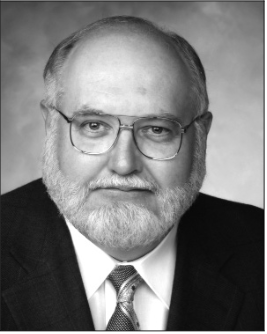
We want to celebrate the wonderfully rich life of Steve Booher, one of Oklahoma’s giants, a giant of family, journalism and community service. The two words that come to mind about Steve are “devoted servant.” I don’t mean a namby-pamby devotion, but a strong dedication that you can see in his life. 
For you, the family in your grief, Sonya, Shannan Booher, Mike Booher, Alan Clepper, and Amanda Barrett and families, and brothers Kent and Scott and grandchildren and nieces and nephews, you have our deepest sympathy and admiration. Family was first with Steve. I think his last Facebook posts were bragging about his grandchildren. I’ve witnessed his and Sonya’s great love and care for each other over the years, and I thank Shannan and Mike for their confidence. I’m just an old weekly newspaper man who has been blessed, like you, to have known and worked with Steve.
Steve’s even referenced in the Bible. In Genesis, it is written:
“There were giants in the earth in those days; and also after that, when the sons of God came in unto the daughters of men, and they bare children to them, the same became mighty men which were of old, men of renown.” There are Steve’s ancestors, giants.
I’ve known him, of course, as a journalist and friend for more than 40 years, and I so admire how he well balanced his family with the demands of weekly newspapering, a career of long hours and hard work.
He and Sonya were married in February. 1985 and they spent the next three days at the OPA midwinter convention, and every anniversary there too. Steve would joke, “Nothing like being able to write off your honeymoon and anniversary as business expenses.” Sonya has stars in her crown for putting up with that.
Steve telling another story at my retirement
Steve was always a storyteller, a craftsman with the written word, and a natural oral story teller of people, politics and everything else. What one story about Steve do you remember now about how Steve could make you smile, something that happened, some story he’d tell? There are many, aren’t they?
He worked with some giants in newspapers, and became one himself, especially Larry Hammer, graduating with pride from the Hammer School of Journalism. “Never stop learning,” Steve said, and he never did, going from hot metal to computers and beyond, always trying to learn more in trying to put out an excellent newspaper for his town, his readers.
He looked and sounded gruff, was stubborn and strong, and earned it all those years putting out a paper, but he seasoned that with a sense of humor and inside he was generous and gentle to those who knew him.
Mike told me how as a boy he had wanted some expensive athletic shoes, but knew his Dad couldn’t afford them. One day Steve came in and told Mike he had some shoes for him. Expecting the cheaper ones—that I would have bought—Mike found his wish—which was a lot for a small-town journalist to dig for.
 I met Steve when he was at Duncan and I at Waurika, and then got to know him covering Friday night high school football, walking the sidelines, cameras and heavy flash equipment and notepads. We have stories, especially on the nights when the weather turned bad. I think one was at the Ringling Waurika rivalry, and Steve disagrees Comanche-Marlow but he’s the better storyteller. 
    Now Steve would embellish stories, and they’d grow like our waistlines as our hairlines and memories receded. Eventually that game went from light rain to a downpour, and then sleet, and so cold they light blazing fires in oil barrels along the sidelines to keep the players from freezing. I expect the next version to include a blizzard moving in with 10 feet of snow, but he probably never thought of it.
Meanwhile he and I would be out there, plastic draped over the flash heads, trying to take photos, getting soaked. We talked about doing it again this fall, for old time’s sake. What a story that would have been. "Geezers on the gridiron."
In his 37 years at the Cherokee Messenger and Republican, he developed into a giant of journalism and community service, always humble, but always an advocate for the people. His gruffness served him well when standing up for what was right, including his strong opinions and editorials. He earned the respect and admiration of most-–even a few preachers and Republicans--because of his service to the town in the newspaper and personally as a volunteer. It’s no accident Cherokee named him a citizen of the year and awarded him a lifetime achievement award.
His papers were, as my wife commented the other night, thick with news.” His front-page column “From This Corner” told more stories the human side, the humor of living in a small town.
As newspapers , especially big ones are facing troubling times, he and I would joke about the buzz word being used by the big boys.  They used to look down their noses at us, saying we covered “chicken dinner news” Now they want “Hyper-local.” "We were hyper local before they were born,” he’d snort.
In addition to his community and family, he served the state press association for years in various roles, all the way to the top as president, always respected for his experience, his humor and hard work. His awards and honors for quality journalism and service piled up, higher than that blizzard that was about to hit. Most recent this spring was induction into the Oklahoma Journalism Hall of Fame.   You could count on Steve.
To me he was what every journalist is supposed to be, but despite the long hours he never forgot his family.
When he visited Mike in the Coast Guard at Corpus Cristi a few years ago, we had is camera at his side and Mike told him they wouldn’t let him aboard.  He kept it. When they came up to the XO to look at the bridge, the officer said you can’t take that in. Steve asked the officer for his name, because he was a member of the press. He wanted to he able to tell about the officer who didn’t want people to know how great a job the Coast Guard was doing. Mike said Steve got a tour of the ship.
The story of Steve's retirement cake
His good-natured humor and jibes among friends and colleagues was legendary. I remember going to his retirement reception a few years ago, and when I walked in, he smiled, scowled and said something like, “I thought I told the police to keep you out of town.” “I bribed them” I shot back.
There’s just one thing about Steve I resent. He looked so handsome and distinguished dressed impeccably and with that neatly trimmed beard. As an old guy with ink still under his fingernails, I was jealous. I tried to grow a beard a few years back, and well, I said something to Steve about not measuring up. “I look like a mangy dog,” I said. Steve replied, “Well, shaving might not help either.…”
If I’ve embellished this, I learned from the best.
I do know this, right now, there’s a new hospitality suite in heaven, Michael Martin Murphy music blaring, and Steve and Hammer are telling stories and God is in stitches
“Wrap it up Clark, wrap it up,” Steve is growling. “These people have deadlines.”
  “Ok, Steve. We will walk the sidelines again, my friend, just not yet.”

Sunday, December 27, 2015

End of year reading, piling up

Five books beckon this month, piling up the reading list in a year-end flourish.
Two others have Oklahoma subjects. One includes stories  about the South by one of the best writers in the country. One is a self-discovery book and another I discovered today. 
I've read more than half of one, and breezed  through two of them because they're books of short chapters and you can bounce around, and thus pretty well read them.
With 23 books read so far this year, I figure I can count those two to boost me past my goal of two a month.
The Oklahoma books
I recently found and bought a book I wish I’d had the idea for, "The Main Streets of Oklahoma--Okie Stories from Every County," by Kristi Eaton. It's full of quirky interviews and facts from every corner of the state, some with photos. Some are county seats, but others are small towns barely on the map.
 I was pleased that four of the chapters featured community newspapers--my love: the Sayre Record and Beckham County Democrat, Garber-Billings News in Garfield County, Seminole Producer in Seminole County, and Cordell Beacon in Washita County. Each of the publishers is interviewed.
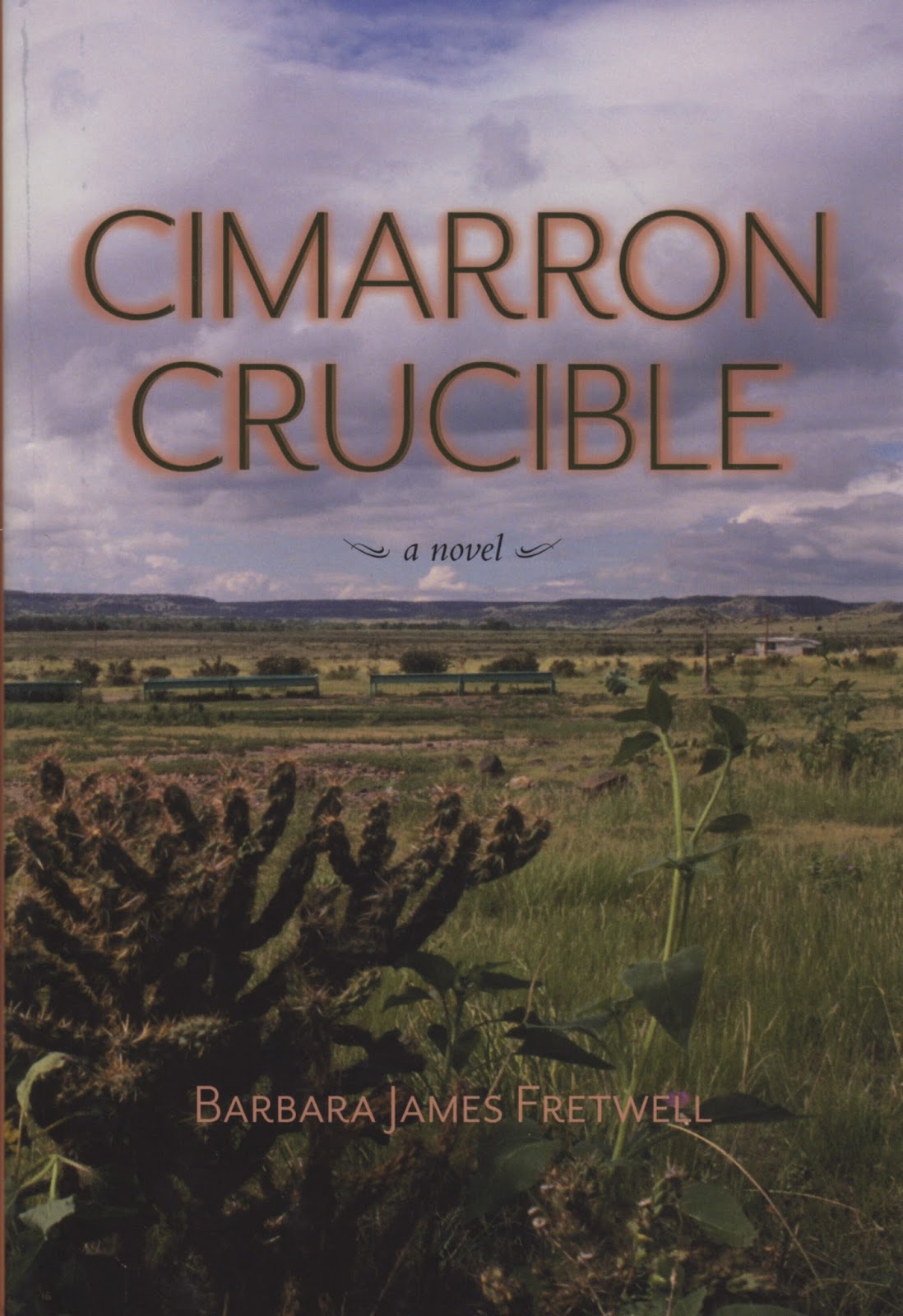
The other Oklahoma book is Barbara James Fretwell's novel, "Cimarron Crucible," set in a fictional town int he Panhandle about a woman running a newspaper. It starts with the disappearance of a small girl, and that has stopped me from reading yet, but I'll get to it. I have a hard time reading anything that has to do with harm to a child. But I love newspapers and the Panhandle.

The South
One book essentially read already is Rick Bragg's "My Southern Journey." Bragg is a heavyset Alabama boy who has worked for the New York Times, winning a Pulitzer. His best is "All Over But the Shoutin'" about his mother. This book is a collection of his short articles in "Southern Living" magazine and elsewhere.    My Southern heritage makes this a scrumptious read--about common people  and their lives.
Discoveries
I found Elizabeth Lesser's "Broken Open--How Difficult Times Can Help Us Grow," on my wife's table, and she can't remember where she got it. I wish I'd found it years ago--it speaks honestly to me and anyone about recovery.
Today, while judging this year's  non-fiction books for the National Cowboy and Western Heritage Museum's annual Wrangler Awards, I came across "Finding Abbey, The Search for Edward Abbey and His Hidden Desert Grave" by Sean Prentiss. 
Abbey, a Western Thoreau, has been a hero for me for more than 20 years, introduced by a favorite student at OSU. Anyone who loves the Southwest knows his value. I've only started this book, and am grabbed by the author's narratives and spirit. Published by the University of New Mexico Press.

Sunday, August 9, 2015

Room to breathe--Sunday in Sayre

The Spirit of the West in Sayre
The minute I get out of the city limits going west, my tension eases, even though I'm on I-40.
Halfway to Amarillo, I always stop for a walk around at Sayre, Oklahoma, right before I get into Texas. But last Sunday, at a more leisurely place, I got off I-40 for a few minutes and drove up into downtown Sayre. My traveling tension evaporated.
There's room to breathe out here in Western Oklahoma. The skies are big, the horizons long, the people friendly. 
I know a few friends from this area, including Brad and Dayva Spitzer, owners of the award-winning  weekly newspaper Sayre Record and Beckham County Democrat, and former UCO student Cody Vignal and family.  I didn't stop to visit anyone, but thought about how peaceful the town is on a quiet Sunday afternoon.
I'd traveled through here on old US 66 on my way to my freshman year in college long ago. Then I saw the old Rock Island depot, thinking about how my Dad went through here in a box car on a freight train longer than that--headed for Mexico to celebrate his high school graduation. Coming back, he tried to jump another freight in Tucumcari and lost his right leg. But he would have seen this depot.
Today, it's the aptly named Short Grass Country museum.
City hall--a monument to civic pride
The streets are wide, like the land, and the Beckham County Courthouse is distinctive as the people--Westerners as the Spirit of the West buffalo suggests on the Courthouse lawn. 
It was also featured in the movie "Grapes of Wrath," but the town is healthier and greener than that now.
 And who can miss the elegant architecture of a former bank that is now city hall? It's a monument to civic pride. Check the equally classy chamber of commerce web site for more information.
This home brightens up a normally dry country
Some of those people make sure there's color in what is usually dry country by painting their houses bright colors. 
Room to breathe--Sunday in Sayre.

Where the streets are as wide as the land--room to breathe

Saturday, April 18, 2015

The journalism of April 19, 20 years ago--part 2

Front page of The Daily Oklahoman, April 19, 1995
 The Oklahoma City Murrah Federal Building bombing on April 19, 20 years ago, affected the entire state. I think it is the only news story since statehood getting almost universal coverage in Oklahoma's almost 200 daily and weekly papers. Pearl Harbor, or 9-11 since then, may be close.
At the time of the bombing, there were 47 dailies and 136 weeklies in Oklahoma. From Boise City to Idabell and Pitcher to Eldorado, I found only four newspapers that didn't have stories about the bombing. My content analysis was for The Oklahoma Press Association newspaper, The Oklahoma Publisher.
The newspaper most affected by the bombing was the daily business newspaper, the Journal-Record, located across the street north from the federal building. Its building now houses the Bombing Memorial museum.
Several staff members, including one of our UCO grads, were injured and were lucky they weren't standing in front of their south windows when the blast occurred. After missing the next day's issue, in an amazing feat of journalism, those journalists used our computers in the UCO Vista to produce the remarkable next issue.
It was "only" a two-page paper--front and back--headlined "Eyewitness Accounts of the Tragedy," were first person stories by each staff member. 
  •  
Oklahoma's two largest newspapers, The Daily Oklahoman and the Tulsa World, starred in their coverage, not just the day after but for weeks and months to come. The World's photo coverage was stunning.
For Oklahoma City's hometown The  Oklahoman, it was the paper's finest hour.  The building, a few miles north of the bombing and built to withstand a tornado, shook. The reporters and photographers were downtown almost immediately, some in their heels scrambling through rubble.
The entire news staff showed up, putting in long hours, day after day. I wasn't supposed to work that night, but went in, and got a "Yes" nod from my editor and helped edit stories and write headlines for the next day's paper. As reports of dead children came in later that day, in the break room, I saw an assistant editor looking out the window and crying.
As the weeks went by, the paper started  "Those Who Died" vignettes, little stories about each of the victims, written by several members of the staff, making the story intensely personal. Those became the model for what the New York Times did after 9-11. 

I believe the paper did more than just cover the news and humanity--it became a tangible psychological force in the survival and healing of the city and state. Every morning, people could pick up something solid, something that said the world is still normal, there is still goodness among all the bad news, something you can count on, even when your foundation of security has been blasted away. The coverage was continual; it was months before a bombing related story didn't appear on the front page.
It was also the source for news by others--it in many ways "owned" the story. Rick Bragg, Pulitizer winner for the New York Times said The Oklahoman was the paper of record--he had to pick it up every day to see what was going on.
The  Oklahoman should have won a Pulitizer Prize for its exceptional work. A tradition is the award goes to  local newspapers for excellence in responding to local crises. But it didn't, to the consternation of those hard-working journalists. My opinion is that the Pulitzer judges snubbed the paper because they so strongly disagreed with the paper's very conservative editorial page.  That was a crime, because the news staff more than earned it.


"Oklahoma City tragedy affects everyone" 
cried the headline in the Ringling Eagle in far southern Oklahoma a week later, telling the story of the state.
As an old weekly newspaper man, I was proud of how those all local news papers responded around the state--reflecting the hardiness and goodness of Okies.
"The bombing washed over Oklahoma like a harshly dropped stone in a serene pool," wrote the Wynnewood Gazette, summarizing the impact as well as any.
In my content analysis of those papers in the next two weeks I found--
  • 84 staff stories about local activities and local impressions of the bombing
  • 57 staff photos of local activities related to bombing
  • 44 staff photos about people who took part in the rescue and other efforts
  • 28 photos of the bombing site
  • 25 stories about the bombing
  • 21 stories about victims with local connections
  • 12 editorials

For  non-journalists, understand that headlines are measured by how tall they are in points--a printer's measure. There are 72 points to an inch. Many headlines today are rarely more than 36 points (a half inch) or 48 points.
The Daily Oklahoman's "Morning of Terror" in all caps was a 144 point headline.

Largest headline in the state was at the Edmond Sun, which came out with the story the afternoon of April 19, "Explosion" in all caps, 268 point
Tulsa World, "Bombing Terror," 186 point

Largest of the weeklies
Meeker News, "Act of Terrorism," 144 point.
  •  
By the way, The Daily Oklahoman became a national leader in helping train journalists on how to deal with victims of trauma and for helping journalists deal with their own trauma. It won the Dart Center for Journalism and Trauma's  Excellence in Covering Trauma
Award that year and used the funds to conduct a national workshop on the UCO campus for journalists.
And the printing plate that produced their April 20  front page hangs in the National Press Club in Washington, D.C.

Wednesday, February 18, 2015

My paper died--II, history

The News-Democrat, after we closed the big windows for air conditioning, carrying my design for the flag as a sgin
1972. I came to Duncan, Oklahoma, to work for the Duncan Banner, because Harrington Wimberly would pay me close to what I was making in Clarinda, Iowa, at the Herald Journal. I think I got $165 a week. 
I was  hired as "area editor," which meant I traveled the rural areas around Duncan where the Banner had circulation in Stephens,  Grady, and Jefferson Counties. Rush Springs, Marlow, Bray, Central, Velma-Alma, Comanche--where my Dad was born, Addington, Waurika, Hastings, Sugden, Ryan and Terral.
We--my wife Neysa and I, with three small children, Vance, Travis and Dallas--came back to family territory with the dream of eventually  owning a weekly newspaper.
That's how I met Don Morrison, his sister Mary Lacy Snider and her husband Brick, at the Waurika News-Democrat in the sweltering summer of 1972.  I was building sources for stories, and knew somehow, that weekly newspapers knew more about their towns than anyone else.
It was an old brick building, on brick streets. Only one room was air-conditioned, because the new Compugraphic-I required it, the paper recently "converted"  to offset printing from hot metal. The Duncan Banner still was letterpress...and a few years earlier at the University of Iowa I'd learned to run a Linotype--which was still in the backshop of the News-Democrat for "job work," an important part of a country weekly's income, on Thursdays and Fridays after the paper was "out."
I think that helped endear me to Don. I think, years later, he saw something of himself, in a "young journalist," as he said in a column.

My newspaper died--I

I had the "stuffing" knocked out of me.
Our last issue--address label to our son Vance, a student at Lubbock Christian
So much so that it's taken me this long to overcome avoiding writing about it.
I'm still recovering, as a matter of fact, after learning of the death of "my" paper, the Waurika News-Democrat at the first of this month.
I was surprised that after all these years--29 to the month after we sold it--I was so raw for my 12 years there.
John Dunn's poetry comes to mind: "No man is an island…any man's death diminishes
me." Any newspaper's death does the same.   I am always sad when a newspaper fails, and I know what a paper means to a town. But this made it very personal.

Clark, with the Don Morrison School of Journalism
The notes and thoughts have been piling up, and it's helped that I wrote a little about it in The Oklahoma Publisher this month. And now  folks in Waurika have started a new newspaper, The Waurika News Journal. It's backed by people I have know a long time, and the editor, Curtis Plant, graduated with my son Travis.
Curtis asked me to write a monthly column for them, and so I put one together, named "Coffee with Clark," from this blog, and  the descendant of my long ago column "Trail  Talk." It appeared this week, 29 years after I quit writing the other one.
That got me started, breaking the logjam of emotions and thoughts. I've also heard from old newspaper friends like Ray Lokey in Tishomingo, Gloria Trotter at Tecumseh,  Ken Chaffin of Healdton and Barbara Walter at Hennessey, Nell Largent of Waurika and others. A weekly newspaper guy in Minnesota wrote about it, and changing my old opinion about broadcast news, the old and new paper even made the television evening news twice on KSWO.
So my excuses are past, the roadblock has been removed.
I go back to Waurika every Mother's Day and plant flowers at Mom's grave, and then drive down those red brick streets, past the old paper office, through the neighborhoods, remembering raising a family there. It can be depressing, as the town has dwindled some. More telling are all the names I know on gravestones in the cemetery.

We gave these away as subscription promotions. 

Still, I want to share some of those memories...they are so much a part of who I am. In fact, those dozen years in Waurika may have been more formative in my life than any since, including raising four wonderful children. That's where I graduated from the Don Morrison school of journalism. Waurika is the closest I have to a home town, having grown up in a city.
Those thoughts and images are brewing in my coffee pot and in future posts. Ironically, when talking about this blog--billed above as an old-fashioned newspaper column, a good friend said to me once, "You've got your newspaper back."
Lots of stories to come--backshops, cut and paste, darkrooms, selling advertising, and more--a salute to the Waurika News-Democrat, the town's oldest business.


Saturday, January 18, 2014

The world's most fantastic cake

What a story I discovered yesterday, right here in Oklahoma, in far northwest Oklahoma to be exact, in the Alfalfa County seat town of Cherokee...
The world's most fantastic cake...and therefore, cake baker.
I drove 151 .7 miles from the house to attend the retirement reception for old friend Steve Booher, editor and publisher of the Cherokee Messenger and Republican.
Steve and I first met years ago, on the sidelines at Ringling, Oklahoma, covering the Waurika Eagles playing the Ringling Blue Devils. He was working for the Duncan Banner and I'd just started as part owner of the Waurika News-Democrat.
It was cold, perhaps with a hint of rain and sleet, I think I remember, and from those years, we've developed a warm friendship.
Steve has gone on to develop one of the best newspapers in Oklahoma, covering Cherokee and environs, population 1,500 in a county of less than 6,000. 
People who think newspapers are dying, don't know much about the newspaper industry, especially community papers. It takes a lot of hard work, dedication and more to make a small town weekly survive, a special breed of people. Steve's one of those who has poured his talent and heart into it. He's also served as president of the Oklahoma Press Association, supported by the patience and tolerance of his wife Sonya.
So I had to go to this reception. When I walked in, he said something typical among friends: "I thought I told the police chief not to let you in town."
As I gravitated toward the refreshments in the rear, I saw this most fantastic cake in the world. Steve told me the cake is a specialty of a Cherokee homemaker, June McGee, who makes cakes that are as delicious as they look--usually the store bought ones look good and don't taste that way, we agreed. Then there is high school student Maci Starks who transfers an image to the top of the cake.
If you don't know, it's the image of Steve on a replica of the Cherokee newspaper's front page.
There was a come and go crowd, including friends and members of the press who drove in from Sallisaw, Enid, Clinton, Hennessey and Oklahoma City. I left before I got to taste the world's most fantastic cake (though it would have been a sin to slice it). 
Then I found out Steve's diabetic and can't have the cake, so it was taken to the nursing home.  Cakeless,  I came away with a refreshed taste of friends, rural Oklahoma  and her great people, that I just had to tell you about.

Thursday, May 3, 2012

No weak coffee, please

“Don’t knock our coffee. You may be old and weak yourself some day.”
That printed sign hung on the wall behind the counter of the All Nite Café in Comanche, Oklahoma.
Sign in the home of daughter and son-in-law, Dr.
and Mrs. Todd Bell, he a champion coffee drinker too.
Long before statehood, Rock Island changed trains crews there, and kept the café on Main Street in business. It was owned by ancestors of mine, who first moved to “The Nation” (Indian Nation) from Texas.
My grandfather soon followed his relatives to the little red clay town in south-southwest Oklahoma, located on the still fresh ruts of the Chisholm Trail. He owned a grocery story, sold coffee, and painting houses for a living.
And coffee’s been on the burner and in my genes ever since.
Granddad always drank coffee in the mornings, after he’d put on a white shirt and tie and lit his first Camel.
Dad and Mom drank coffee for as long as I can ever remember. When I was a kid, the Jewel Tea man’s truck used to pull up in front of our house on the outskirts of Fort Worth, and they’d buy strong coffee with chicory from New Orleans. Later, when visitors like my Uncle Mike would come visit, they’d stay up all night talking, having eggs and bacon and coffee well after midnight.
I started drinking it as a teenager. It developed into an addiction during all-night college cram sessions and in working on newspapers at all hours of the day and night.
Now that I’m getting close to being old and weak, I’m trying to cut back—not quit mind you—just limit myself to less than three pots a day—no matter what time of day. That's part of the price of being a journalist. Put out a weekly newspaper like we did at the Waurika News-Democrat, and you have to have coffee all Tuesday night long.
But when I do get old and weak, you can be assured—as the folks who know me will tell you—my coffee won’t ever be old and weak. It’ll be strong, 24 hours a day. And like me, no fancy stuff, or sweetened or weakened with milk. Just straight, thank you.
It's not by accident I like the rap song, "Black Coffee, No Sugar, No Cream," and that we have more coffee mugs than ever needed.
When I die, they wont have to embalm me—my veins will be full of caffeine.
The folks in the All Nite Café in Comanche, Oklahoma,  100 years ago, would understand.


Wednesday, July 20, 2011

Newspaper novel, chapter 2?

Stumpy had tried to jump a freight train in Tucumcari when he was 18, slipped and fell under the big steel wheels of a boxcar. He’d pushed himself away and that had cost him his little finger too.
“Came home to die—couldn’t rodeo anymore, play football, nothing,” he said when Greg asked about the leg. “But my coach told me to quit feeling sorry for myself. Same guy I’d cold-cocked the year before for picking on my little brother.” Stumpy laughed.  “Got expelled for three days.”
“The coach bought me a crutch and took up a collection for my wooden leg.”
“Worst part is when my big toe itches. I can feel it, but it ain’t there.”
Newcomers to town would be shocked when they’d see Stumpy ccassionally without his leg. He’d hobble down the sidewalk with a pant leg penned up, hopping along on crutches with a peculiar clop-plop sound, alternating with the one cowboy boot.
But if he was crippled, he wasn’t handicapped, Greg knew.
One time a drunk cowboy had been thrown out of a downtown bar and landed at Stumpy’s foot as he hobbled along.
The cowboy stood up, cussing loudly as a crowd gathered at the door of the bar. People from the adjacent Phillips department store gathered in the window and he started threatening them.
Stumpy told the drunk to shut up and leave, that he ought to be ashamed.
The cowboy turned on Stumpy and pulled a knife.
What happened next happened so fast people weren’t sure it did, and the legend grew. Greg’s dad had been in the department store and got the story though.
Balancing on his one leg, Stumpy swung one crutch and quickly caught the cowboy in the groin. As the drunk bent over in pain, Stumpy brought the crutch around and slapped him on the side of the head with a loud pop, knocking off his dirty Stetson.
The cowboy slumped to the pavement out cold, and Stumpy hobbled over to his pickup and drove off, while the bar owner called the police.
The next day the Index carried the story, with the headline: A Crutch to the Crotch. The first two sentences still made Greg smile: “Stumpy stomped a drunk, leaving him out cold. He may be handicapped, but he’s not foot-capped.”
Stumpy was so proud of the article he had it laminated and tacked to the wall behind his cash register.
“That’s when we became friends,” Greg’s dad told him. “Only time he got his name in the paper. Course it embarrassed your mom to use such language in the paper, and the ministerial alliance thought I was giving him free advertising.
“They’re all for the First Amendment when they agree with it,” Greg said.
“Yeah, remember to put out the paper for the little people—the Stumpys,” his dad had said.
, 

Weekly newspaper novel--Chapter one?

Greg Caldwell had scandalized the town when he starting running ads from Stumpy's Spur.  
Stumpy Clark wore wide-striped suspenders,  had a wooden leg and walked with a limp. But he was the fanciest  two-stepper in the Texas Panhandle. His dance hall at the north edge of Darling, Stumpy’s Spur, reeked of beer and urine and cigarette smoke. Attracting bands and dancers from the entire Panhandle,  the Spur was Darling’s biggest attraction, although the  chamber of commerce wasn’t too proud of it. The gravel parking lot covered two acres, and would be packed with pickups and cars every weekend.
The Darling Index needed the money. Even the Ministerial Alliance had called to protest what they saw as a newcomer changing the paper. Greg ignored them, reminding them they all wanted 20 percent discounts for their church ads, and were often late paying.
Stumpy always paid cash, pulling out a thick roll of bills and flipping out  twenties until the half page a week ad was paid for.
He and Greg would have coffee once a week at the Fat Lion, and Greg always got an earful about what was really going on in town—not the official view—but the gossip and behind the scene politics of the town’s leading citizens.
“What you hear at the Spur is usually reliable—once you clean the bullshit off the boots,” Stumpy would say, tearing off a wad of Beechnut tobacco and putting it in his cheek as they left the Lion.
He’d asked Stumpy about the brick thrown through the newspaper door.
Stumpy winked. “You ever dance, Greg?”
“Yeah, but not much…you know those Baptists.”
“Bet you step on toes when you do, then, right?”
“Yep,” Greg’s face flushed, thinking of the last person he’d held close to him and hurt her feet.
“What happened?”
Stumpy smiled. “Any more questions about the brick?”
Greg stopped, then laughed and waved at Myrt for more coffee.

Monday, April 19, 2010

Weekly newspapermen

A long time ago... Clark, and Donald J. Morrison, partners